Review season is upon us, and many talent, HR, and law firm leaders are taking a step back to consider if their performance management processes are really producing the outcomes they want.
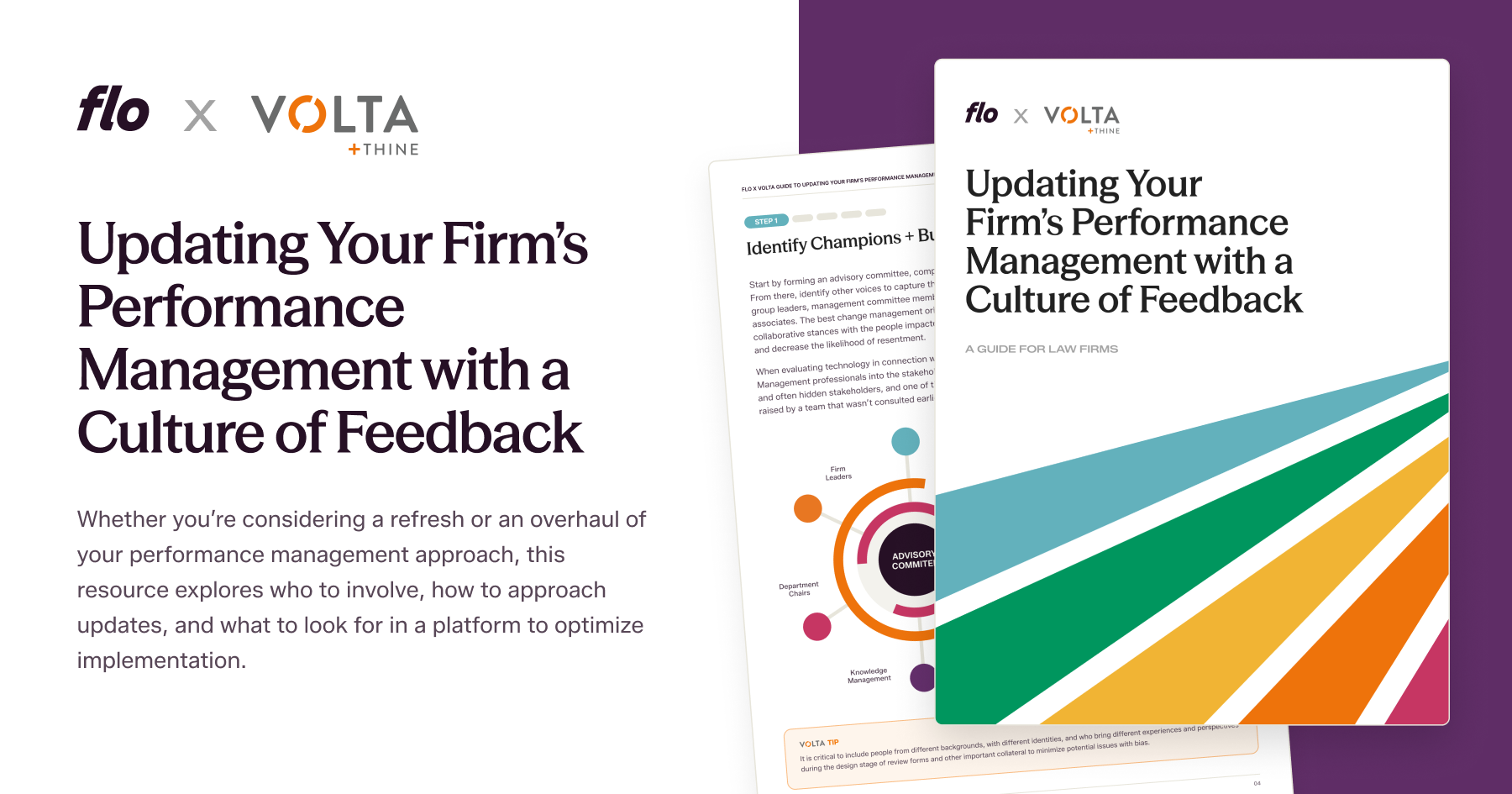
We’ve partnered with Flo, a leader in legal talent and performance management technology, to create a step-by-step guide outlining what to consider when building a culture of feedback and selecting supporting technology. Whether you’re overhauling your approach or making a small tweak, this resource offers helpful tips to keep in mind throughout the process.
Here’s a sneak peek at the guide for law firms:
In the simplest terms, performance management in law firms is a talent strategy that aligns the quality of lawyering with larger organizational objectives like client retention, profitability, or an enhanced brand. Done well, it keeps lawyers and legal professionals engaged, sets clear expectations, and provides them with tools and information to support their growth and development across key dimensions, including technical skills, relationship skills, and business management skills.
Why Revamp Performance Management?
Within the current context of law firm management, effective and sustainable performance management strategies must navigate shifting recruitment processes, increased competition for talent, the ubiquity of artificial intelligence (AI), and the priorities of multiple populations and generations. There are more possibilities available than ever when it comes to finding a technology platform that brings strategic management goals to life while keeping up with constantly adapting modern professional services firms, which can feel overwhelming. Valuable performance management technology must provide data and future-focused insights, be flexible, and anticipate business needs.
Whether you’re considering a refresh or an overhaul of your performance management approach, this resource outlines some key steps and considerations to support your firm’s efforts. We’ll invite you to consider who to involve, how to approach updates, and what to look for in a technology platform to optimize implementation.
Communicating the Purpose of Performance Management
Performance management systems thrive when embedded in a culture that underscores their goals and reinforces their expectations. In other words, it’s about firms and leaders knowing what they want and saying what they really mean. The first step for firms is identifying the unifying goal they are hoping to accomplish: evaluative or developmental. Firms often attempt to serve both goals in a single process. When reviewers don’t know whether they’re evaluating or developing, they achieve neither successfully. In turn, reviewees experience ambiguity, lose faith in the feedback process, and share less candidly in their self-assessments.
What Else is Inside
When to drive change internally and when to bring in outside support
Assessing where your current process falls short
Designing competencies and questions by level, practice group, and role
Building psychological safety so feedback becomes second nature
A typical annual review timeline, from September kickoff to February conversations
Six best practices for sustainable adoption, from piloting to coaching
You can download the full resource below: